Red-Light Therapy
Red-light therapy
A gentle, non-invasive way to support your body's recovery.
How photobiomodulation may help
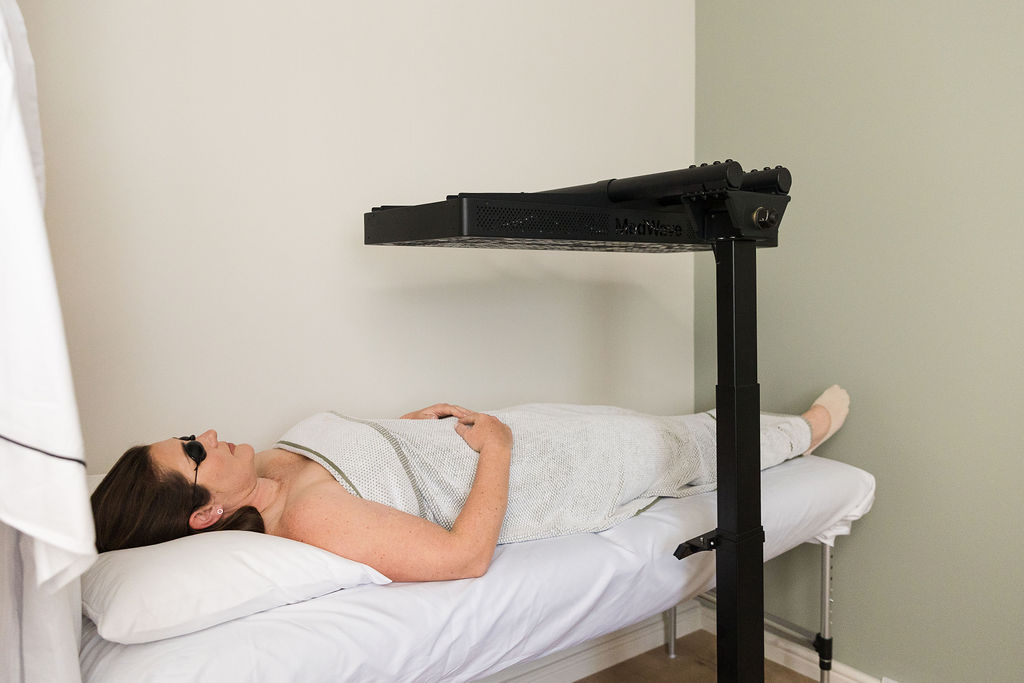
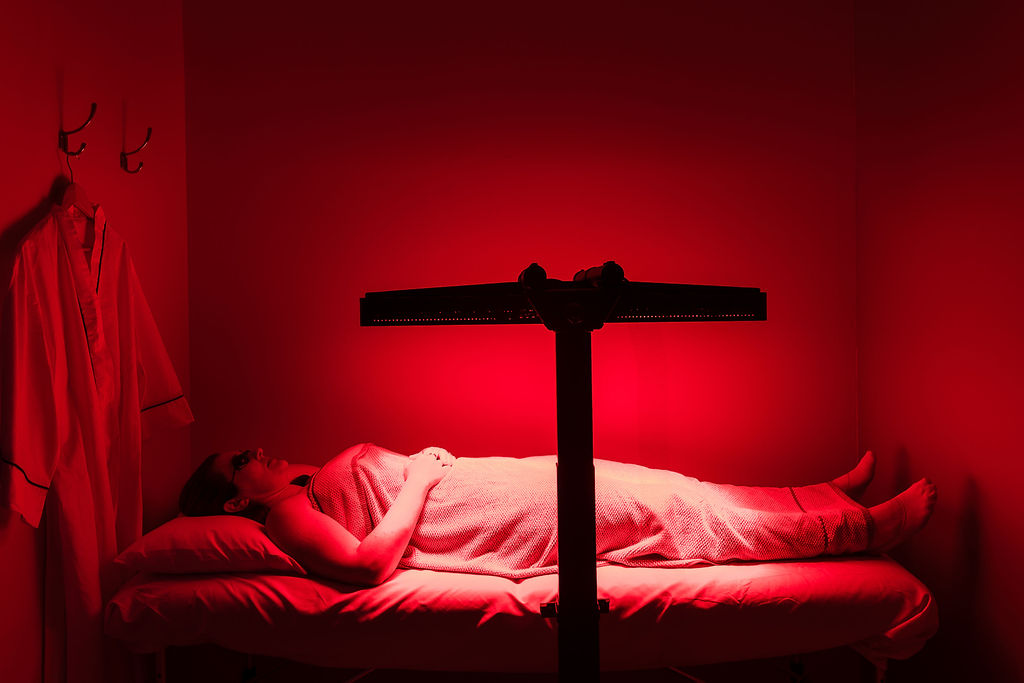
At Elah Health, photobiomodulation, commonly known as red-light therapy, is offered using MedWave technology. It uses selected wavelengths of red and near-infrared light to support natural cellular processes involved in tissue repair, circulation and the regulation of inflammation and pain. Treatment is non-invasive, non-thermal and tailored to the individual following an appropriate clinical assessment.
Photobiomodulation may be used as a supportive therapy for selected musculoskeletal pain and stiffness, soft-tissue injuries, muscle recovery, scar sensitivity, tissue healing and skin health.
Within cancer rehabilitation, carefully selected protocols may also support the management of certain treatment-related concerns, including post-surgical discomfort and restricted movement, breast cancer-related lymphoedema, radiation-related skin or tissue changes and some neuropathic symptoms. The evidence differs between conditions, and treatment is therefore recommended only when clinically appropriate. Photobiomodulation does not treat cancer and is used alongside, not in place of, medical, oncology or rehabilitation care.
This is an in-person service at Caledon Corner, 60 Caledon Street, Somerset West. Whether red-light therapy is appropriate for you is discussed in consultation. It is general supportive care, not a treatment for cancer itself.
Fees
First session
Consultation plus red light, 50 min
R700
Follow-up
Red light only, 30 min
R300
10 sessions
Red-light therapy package
R2 000
References
These publications support the discussion of photobiomodulation mechanisms, tissue healing, breast cancer-related lymphoedema, post-mastectomy pain and selected cancer-treatment side effects. The strength of evidence and recommended treatment parameters differ between indications and devices.
- Ebid AA, El-Sodany AM (2015). Long-term effect of pulsed high-intensity laser therapy in the treatment of post-mastectomy pain syndrome: a double-blind, placebo-controlled, randomized study. Lasers in Medical Science, 30(6), 1747-1755. https://doi.org/10.1007/s10103-015-1780-z
- Hamblin MR (2017). Mechanisms and applications of the anti-inflammatory effects of photobiomodulation. AIMS Biophysics, 4(3), 337-361. https://doi.org/10.3934/biophy.2017.3.337
- Hamblin MR (2018). Mechanisms and mitochondrial redox signaling in photobiomodulation. Photochemistry and Photobiology, 94(2), 199-212. https://doi.org/10.1111/php.12864
- Robijns J, Nair RG, Lodewijckx J, et al. (2022). Photobiomodulation therapy in management of cancer therapy-induced side effects: WALT position paper 2022. Frontiers in Oncology, 12, 927685. https://doi.org/10.3389/fonc.2022.927685
- Smoot B, Chiavola-Larson L, Lee J, Manibusan H, Allen DD (2015). Effect of low-level laser therapy on pain and swelling in women with breast cancer-related lymphedema: a systematic review and meta-analysis. Journal of Cancer Survivorship, 9(2), 287-304. https://doi.org/10.1007/s11764-014-0411-1
- Taha N, Daoud H, Malik T, Shettysowkoor J, Rahman S (2024). The effects of low-level laser therapy on wound healing and pain management in skin wounds: a systematic review and meta-analysis. Cureus, 16(10), e72542. https://doi.org/10.7759/cureus.72542